How to Plan a Summer Party People Will Actually Enjoy
Planning a company summer party? Here's how to choose the right format, venue, and activities - and avoid the mistakes that make these events forgettable.
The difference usually comes down to a few decisions made during the planning process. This guide covers what those decisions are and how to get them right.
Get the format right before anything else
The first thing to figure out is not the venue, it's the format. What kind of experience do you actually want to create?
There are a few directions you can go:
Activity-led parties. A central experience (sailing, beach games, cooking competition, creative workshop) that gives people something to do and talk about, with food and drinks built around it. These work well for teams that find purely social settings awkward, or that have grown a lot recently and don't all know each other.
Experience-led celebrations. A distinctive setting - a rooftop terrace, a private beach club, a restaurant with a great kitchen - where the environment does a lot of the work. Food, drinks, music, and enough space for people to move around and have real conversations. Works well for teams that are already close and just want to celebrate together.
Mixed format. An activity in the afternoon that transitions into a shared dinner or drinks as the evening. This is often the best of both worlds: the activity breaks the ice, the evening deepens the connection.
The format also affects who comes. If the party is purely social and stretches late into the evening, some people (particularly parents with young kids, or those who live further away) may not stay long or may not come at all. An afternoon activity followed by an early dinner is often more inclusive.
Venue: what works for summer
Barcelona has no shortage of options for summer events. A few formats worth considering:
Rooftop venues and terraces. Fantastic in summer, and the views over the city or towards the sea create a strong sense of occasion. Best for 30-150 people. Book early - these fill up fast in June and July.
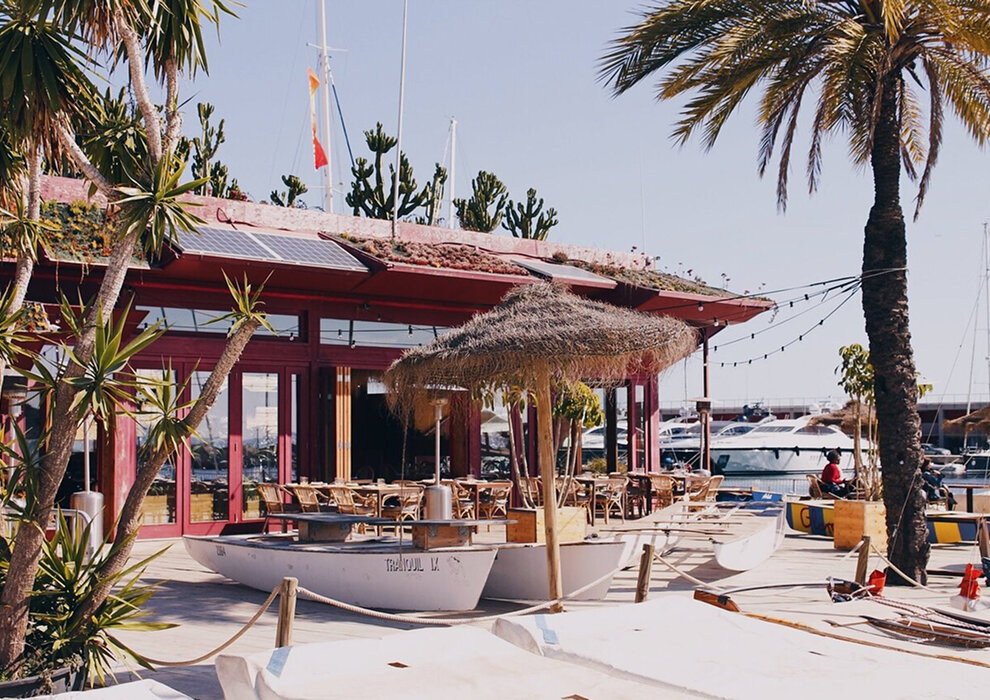
Beach clubs and seafront venues. The sea backdrop, outdoor setting, and relaxed atmosphere make these a popular choice. Works particularly well for mixed format events where you combine an activity with a meal. The challenge is that they can feel generic if not personalised - venue choice matters a lot here.
Private villas and masias outside the city. For teams that want to fully step out of the office environment, a private venue in the Maresme or Vallès offers space, greenery, and exclusivity that a city venue can't match. Typically requires organising transport, but the effect on the group is worth it.
Industrial and design spaces. Warehouses, studios, and converted spaces in Poblenou and Gràcia have become go-to options for companies that want something with character. More flexibility to create the setup you want.
Restaurants with private rooms or garden spaces. For smaller groups (15-40 people), a great restaurant with a private space combines quality food with a more intimate setting.
One thing to keep in mind: outdoor venues in Barcelona work well from May through September, but evenings in July and August can be genuinely hot. If you're looking at venues without shade or air conditioning, factor this into your timing.
A real example in Barcelona: morning on the sea +cocktail and party at Red Fish
One of the formats we've put together for summer parties in Barcelona combines a nautical team building activity with a cóctel at a seafront venue. Here's how a recent edition looked:
10:30 - Arrival at Club Patí Vela Barcelona, on the city's waterfront
11:00 - Team building session split into two stations of around 16 people each, rotating every hour:
Llagut Català: a practical class in traditional Catalan rowing. A coach guides the group to synchronise strokes and find a shared rhythm. It ends with a short regatta between teams - competitive enough to be fun, accessible enough that nobody feels left out.
Kayak, SUP and beach activities: circuits on the water and on the sand, including beach volleyball, relays, and paddleboard challenges.
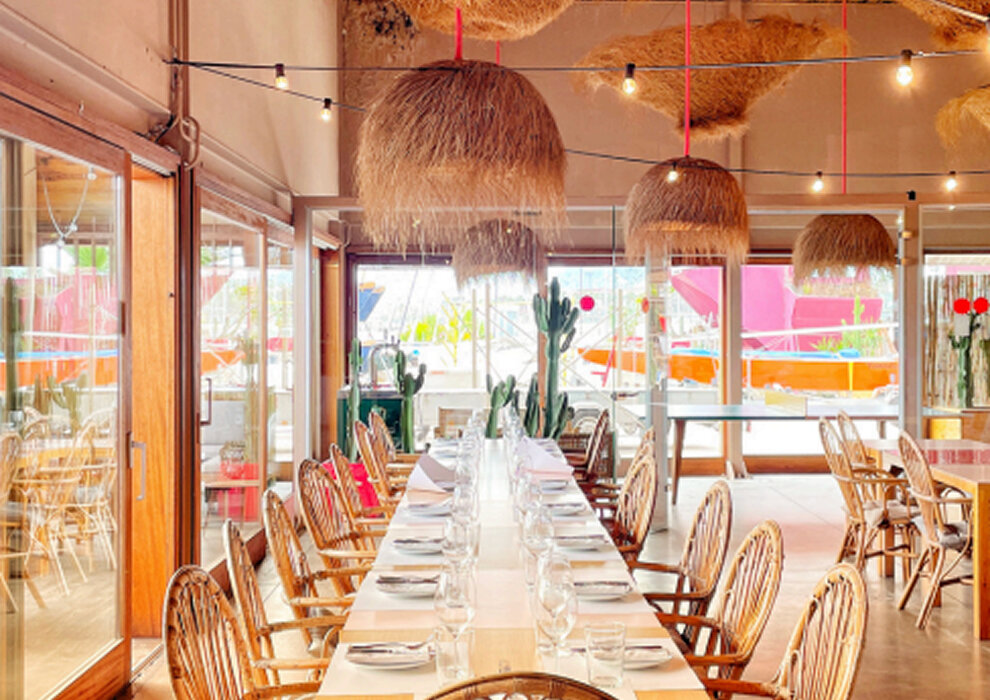
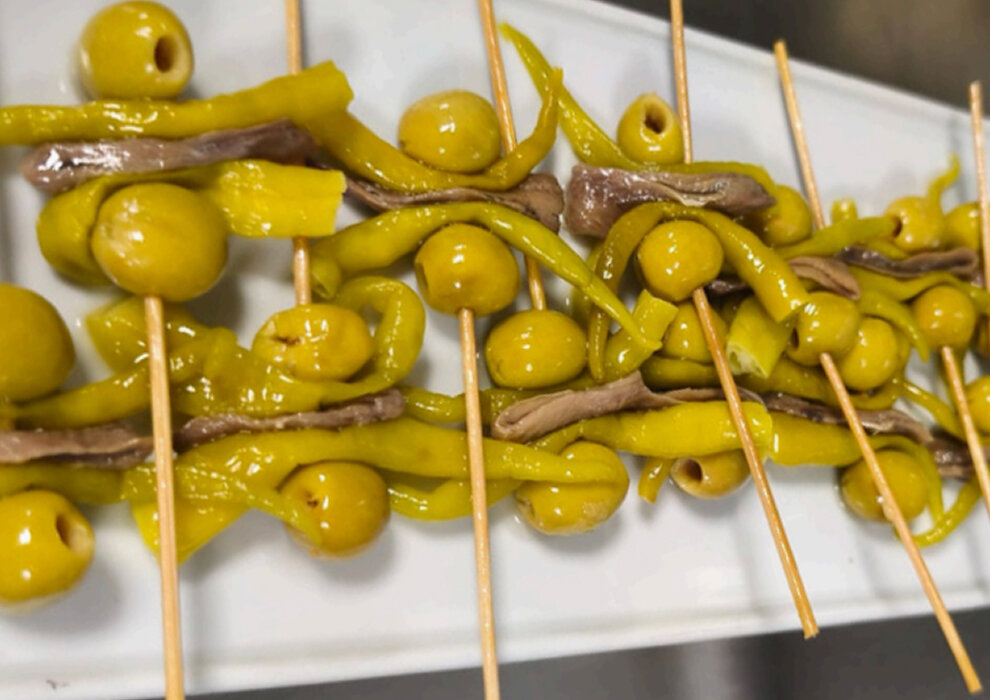
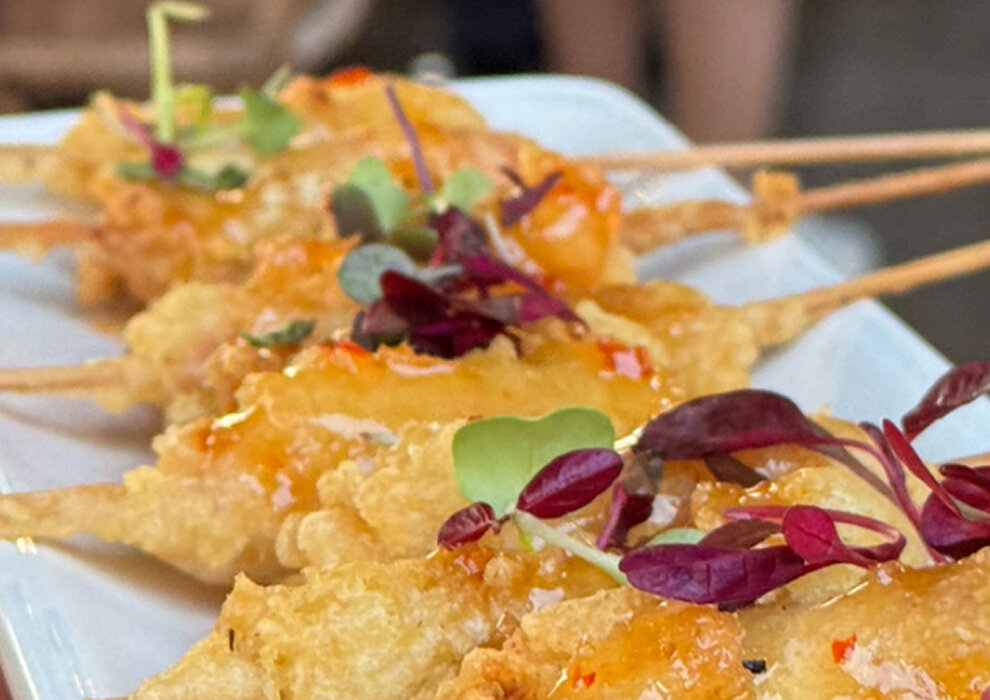
13:30 - Cóctel at Sala Bambú inside Red Fish restaurant, a 90m² space with nautical design, natural wood, and panoramic views over the Mediterranean and the Barcelona skyline. Mediterranean food, drinks, and the kind of setting that makes people slow down.
15:30 - Music and drinks continue on the terrace
17:30 - End of event
The whole thing runs about 7 hours, but it doesn't feel long because the format keeps shifting. The morning is active and team-focused. The afternoon is relaxed and social. People arrive as colleagues and leave having actually spent time together.
This kind of programme works particularly well for groups of 25-60 people and can be scaled up with additional stations or a larger venue space.
Food and drink: the part people remember
People will forget the exact schedule. They will remember if the food was good.
This doesn't mean you need to spend a fortune. It means making intentional choices rather than defaulting to whatever the venue suggests without thinking about it.
A few things that make a consistent difference:
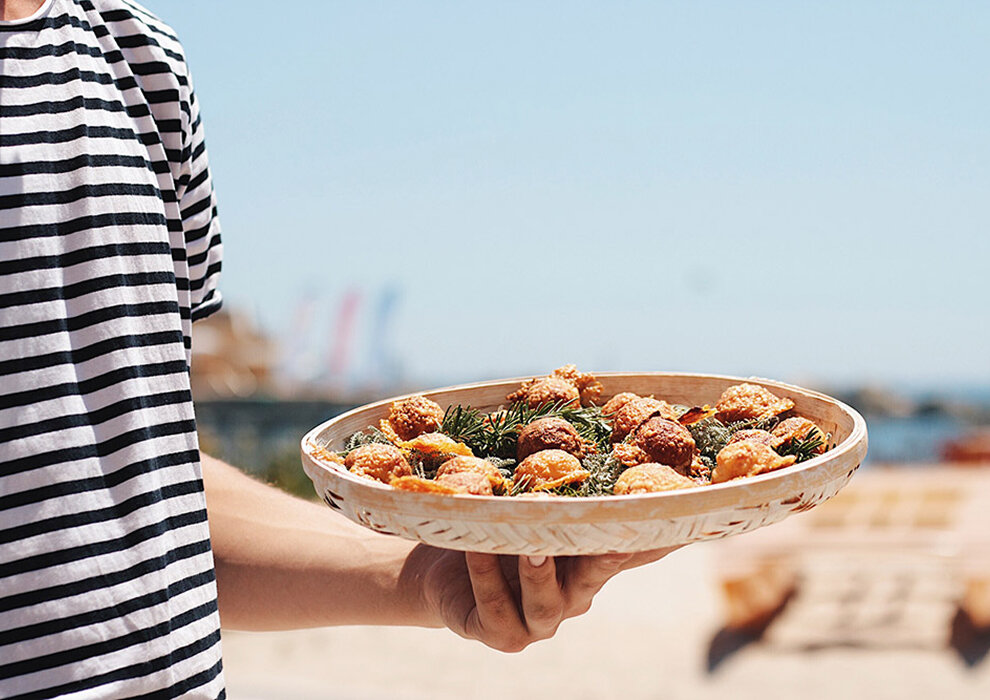
Sharing is better than individual plates. Shared dishes create more interaction and a better atmosphere than plated meals where everyone stares at their own plate. Tapas, mezze, barbecue stations, and grazing boards all work well for summer parties.
Drinks matter as much as food. A thoughtful drinks selection - including good non-alcoholic options - shows attention to detail. A signature cocktail for the event is a small touch that creates a strong impression.
Dietary requirements are not an afterthought. Collect them in advance and make sure plant-based, gluten-free, and allergy-related needs are genuinely catered for.
Activities: what works for a party format
Not every summer party needs a structured activity, but having something to do beyond talking and drinking usually makes the event better for everyone - especially for people who don't know each other well yet.
For a summer party format, the activities that tend to land best are light enough to feel fun rather than obligatory:
On the water: sailing, kayaking, paddleboarding, traditional rowing. Barcelona's seafront makes these uniquely accessible.
On land: beach Olympics, urban team challenges, photo missions through the city.
Creative and social: cocktail making, a paella cook-off, boat challenge, art-based challenges, a blind wine tasting.
Entertainment: a DJ who reads the room, live rumba music, a magician for smaller and more intimate groups.
The key is keeping activities optional enough that people who just want to talk can do that, while giving those who want to participate something to get into.
Common mistakes worth avoiding
Not having a clear point of contact on the day. Someone needs to be responsible for logistics - liaising with the venue, managing timings, handling anything unexpected. If that person is also trying to participate and relax, things will drift.
Underestimating transport. If the venue is outside the city centre, organising shared transport removes a major friction point and means everyone arrives together, which immediately changes the group energy.
Over-programming. A summer party should feel relaxed. If every 30 minutes is a scheduled activity, it starts to feel more like an obligation than a celebration.
Forgetting the small things. Sunscreen at outdoor venues in June or July, shade options for a long afternoon, a coat check if the evening cools down - small practical details that show you thought about the experience, not just the programme.
Planning a Summer Party?
We organise experiences from small team to large-scale outdoor events for 200+ people. If you're starting to think about this year's event, get in touch and we'll help you shape the concept.








.jpg)
.jpg)
